Posts

Analysis of the story "How Much Land Does a Man Need? "
Image
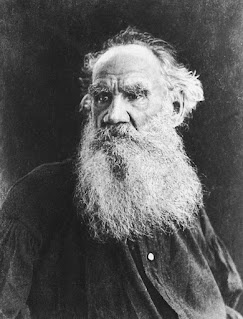
  "How Much Land Does a Man Need?" Hello Readers... Welcome to this blog! Here, we will explore the short story How Much Land Does a Man Need? , its themes, and a brief introduction to the author. This is part of a thinking activity. Introduction of Author :   Leo Tolstoy (1828–1910) was a famous Russian writer known for classic novels like War and Peace and Anna Karenina . His works often explore deep philosophical and moral questions. Later in life, he focused on spirituality and simple living, influencing leaders like Mahatma Gandhi and Martin Luther King Jr. Major works :- Here are some major works of Leo Tolstoy War and Peace – A historical novel about Russia during the Napoleonic Wars. Anna Karenina – A tragic love story about a woman in Russian society. The Death of Ivan Ilyich – A short novel about facing mortality. The Kreutzer Sonata – A story exploring jealousy and marriage. Resurrection – A novel about justice and redemption. Introduction of short story : Ho...

Poem Analysis "Since there's no help" by Michael Drayton

Image
                                              "Since There's No Help," Hello Readers! Welcome to this blog! Today, we will explore the poem "Since There’s No Help" by Michael Drayton  a compelling sonnet about love, separation, and emotional conflict. This analysis is part of a thinking activity , and I will examine the poem’s meaning, major themes, and literary devices to better understand its depth About the Poet: Michael Drayton Michael Drayton (1563–1631) was an English poet of the Elizabethan and Jacobean periods. Born in Warwickshire, he was a prolific writer known for his contributions to various poetic forms, including sonnets, historical poetry, and pastoral works. Drayton’s most ambitious work, "Poly-Olbion" (1612, 1622), is an extensive poem celebrating the landscapes, history, and legends of England and Wales. His sonnet sequences , particularly those in ...

George Orwell’s Animal Farm

Image
  George Orwell’s Animal Farm Old Major’s Speech: The Spark of Rebellion in Animal Farm Introduction George Orwell’s Animal Farm is a classic political allegory that critiques the corruption of power. It tells the story of a group of farm animals who overthrow their human master in pursuit of freedom but ultimately fall victim to tyranny. The novel, inspired by the Russian Revolution, explores how revolutions often start with noble ideals but can be twisted by those in power. At the heart of this revolution is Old Major , a wise and respected pig whose speech lays the foundation for the animals’ uprising. His vision, though pure, unknowingly sets the stage for both liberation and future oppression. Old Major: The Revolutionary Thinker Old Major, a 12-year-old boar, is the intellectual force behind the rebellion. He is revered by the other animals for his wisdom and experience. Though he does not live to see the uprising, his ideas shape the destiny of the farm. One evening, s...

Title explanation "La Belle Dame sans Merci"

Image
  "La Belle Dame sans Merci" Hello Readers! Welcome to this blog! Today, we will explore the meaning behind the title of the poem La Belle Dame sans Merci, written by the renowned English poet John Keats. This analysis is part of a thinking activity, aiming to deepen our understanding of the poem’s themes and symbolism. About the Author: John Keats John Keats (1795–1821) was one of the most influential poets of the Romantic era. His poetry is known for its vivid imagery, deep emotional resonance, and exploration of beauty, mortality, and nature. Despite his short life, Keats left behind a rich collection of poetry, including masterpieces like Ode to a Nightingale, Ode on a Grecian Urn, and To Autumn. Initially underappreciated, his work has since become a cornerstone of English literature, admired for its depth and lyricism. About the Poem La Belle Dame sans Merci is a ballad written by Keats in 1819. It is one of his most famous works, noted for its haunting atmosphere and e...

Heart of Darkness

Image
                                                              Heart of Darkness   About the Author Joseph Conrad, originally named Józef Teodor Konrad Korzeniowski, was born on December 3, 1857, in Berdychiv (present-day Ukraine). Though Polish by birth, he later became a British citizen and is regarded as one of the most influential novelists in English literature. Remarkably, English was his third language after Polish and French, yet he mastered it to create some of the most profound literary works. His novels often delve into themes of imperialism, existential struggles, and the complexities of human nature. Conrad’s major works include Heart of Darkness, Lord Jim, and Nostromo. He passed away on August 3, 1924, in England, leaving behind a legacy of deeply philosophical and psychologically rich narratives. About the Story He...

The Nightingale and the Rose

Image
                                   "The Nightingale and the Rose" About the Author Oscar Wilde was a renowned Irish poet, playwright, and novelist, celebrated for his wit, flamboyant style, and sharp social commentary. Born on October 16, 1854, in Dublin, Ireland, he became one of the most famous literary figures of the late 19th century. His notable works include The Picture of Dorian Gray , a novel exploring vanity and moral corruption, and The Importance of Being Earnest , a comedic play known for its satire of Victorian society. Despite his success, Wilde’s life was marked by controversy, and he was imprisoned for his homosexuality, which was considered a crime at the time. He spent his final years in exile in France, where he passed away on November 30, 1900. About the Story The Nightingale and the Rose – A Tale of Love and Sacrifice Introduction Oscar Wilde’s The Nightingale and the Rose is ...

The God of Small Things

Image
                                        The God of Small Things A bout the Author Arundhati Roy is an acclaimed Indian writer, activist, and public intellectual. Born on November 24, 1961, in Shillong, India, she gained international recognition with her debut novel, The God of Small Things, which won the Booker Prize in 1997. Beyond fiction, Roy is known for her outspoken views on political, environmental, and social issues, often addressing topics such as human rights, economic inequality, and state policies. Her other notable works include The Ministry of Utmost Happiness and a series of essays exploring global and Indian socio-political concerns. About the Story The God of Small Things is a deeply moving novel about love, loss, and the rigid structures of society. Set in Ayemenem, Kerala, it tells the story of fraternal twins, Estha and Rahel, whose lives are shaped by a tragic ...

Araby by James Joyce

Image
                                                                              Araby by James Joyce About the Author James Joyce (1882–1941) was an Irish modernist writer known for revolutionizing narrative techniques in literature. His works, including Ulysses, A Portrait of the Artist as a Young Man, and Finnegans Wake, explore themes of identity, consciousness, and the complexities of human experience. Joyce is celebrated for his use of stream of consciousness, intricate wordplay, and deep engagement with Irish culture and politics. His writing often captures the inner thoughts of characters, highlighting the significance of seemingly ordinary moments in shaping personal and collective histories. About the Story “Araby” is a short story from James Joyce’s Dubliners (1914) that captures the tr...

A Dance of the Forests By Wole Soyinka

Image
                                              A Dance of the Forests By Wole Soyinka Introduction:  Wole Soyinka’s A Dance of the Forests (1960) is one of the most significant plays in African literature, blending myth, history, and political allegory. Written to commemorate Nigeria’s independence, the play critiques the idealized vision of the past and warns against the repetition of historical mistakes in the newly independent nation. Instead of glorifying pre-colonial traditions, Soyinka exposes the flaws of both the past and present, urging his audience to confront their own complicity in cycles of oppression and corruption. The play is a complex and symbolic work, interweaving human and supernatural elements. The story follows the interactions between the living and the dead, with the Forest Head and other mystical beings acting as intermediaries. Soyinka employs...